The Teen DojoIntensive Outpatient Program (IOP) · Ages 14+
Intensive, structured therapy for teens, in person, virtual, or hybrid, without leaving school, home, or daily life.
Teen IOP · Ages 14+ · Monroeville & Irwin · Virtual across Pennsylvania · Joint Commission Accredited · DDAP Licensed
Teen IOP in Monroeville, Irwin & the Greater Pittsburgh Area

Parents, teens, and professionals often need different information. Pick the lane that fits you best.

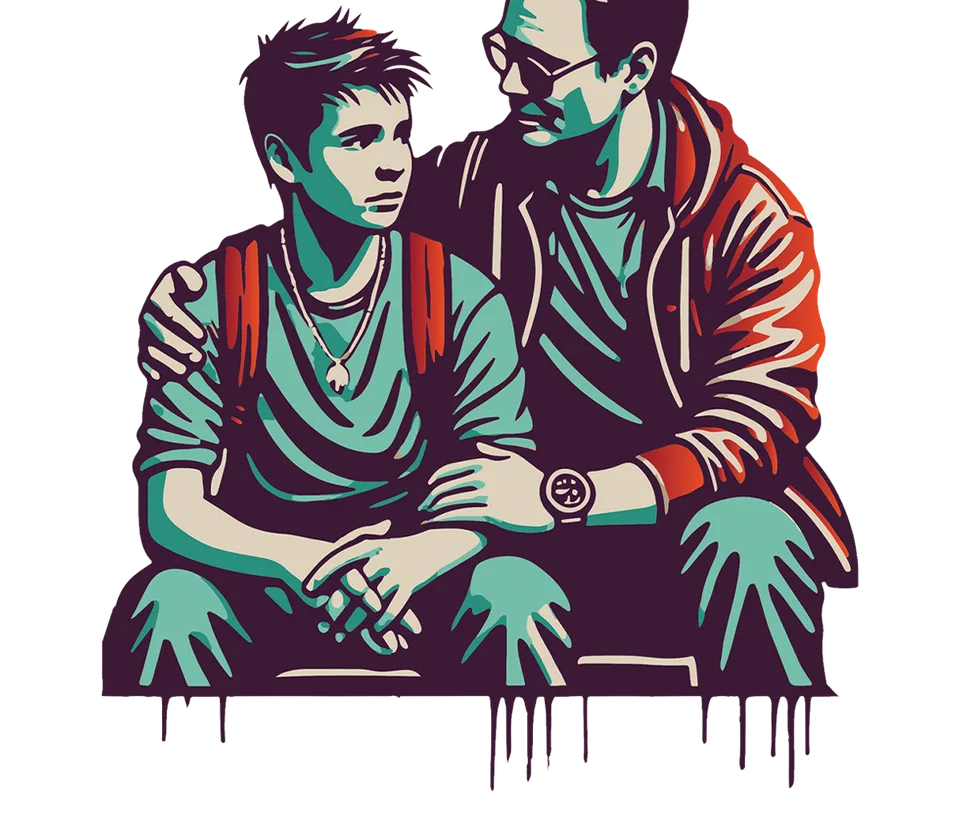
Parents aren't failing. The world changed.
If you're here, something probably feels bigger than "normal teen stuff." Maybe your teen is shutting down, melting down, avoiding school, pulling away, using substances, hurting themselves, or just disappearing into a version of themselves you barely recognize.
That doesn't mean you failed.
Teens today are trying to form an identity in a world that's always watching, always commenting, always comparing. Parents are trying to guide them through a world they didn't grow up in. When everyone feels stuck at the same time, it's not an individual failure. It's a systems problem.
The Teen Dojo gives teens a structured place to practice coping, connection, emotional regulation, and repair while staying connected to school, home, and daily life.
4 in 10
U.S. high school students report persistent sadness or hopelessness.
2 in 10
U.S. high school students seriously considered attempting suicide. Nearly 1 in 10 attempted.
49.5%
of U.S. adolescents have had a diagnosable mental disorder by ages 13–18.
National data. These numbers aren't here to scare families. They're here to remind them they're not alone — and that waiting for a crisis isn't the only option.
What is The Teen Dojo?
The Teen Dojo is an Intensive Outpatient Program for teens ages 14+ who need more support than weekly therapy but don't need 24/7 inpatient or residential care.
IOP isn't just "more therapy." It's a structured clinical environment where teens practice skills in real time, with peers, clinicians, and family support. The goal isn't only insight. It's repetition, connection, repair, and the ability to use new skills where life actually happens.
Insight is important. Practice is essential.
Weekly therapy can be powerful, but some teens need more frequency, more structure, and more chances to practice. The Teen Dojo creates that bridge: more support than outpatient therapy, while helping teens stay connected to home, school, and daily life.

You're not broken. You're overloaded.
You don't have to have the perfect words for what's going on.
Maybe you're anxious all the time. Maybe you're angry and don't know why. Maybe you feel numb. Maybe school feels impossible. Maybe your phone is making everything worse, but being without it feels worse too. Maybe people keep telling you to "just talk about it," but talking hasn't changed enough.
The Teen Dojo isn't a lecture. It's a place to practice what to do when life gets loud.
Group isn't the risk. Isolation is.
When weekly therapy isn't enough, but life still has to keep moving.
If any of this sounds familiar, you're in the right place — whether it has a name yet or not.
- Anxiety
- Panic
- Depression
- Mood swings
- Anger
- Emotional dysregulation
- Self-harm thoughts or urges
- Suicidal thoughts needing support
- School avoidance
- Shutdown
- Numbness
- Social isolation
- Bullying
- Friendship conflict
- Family conflict
- Trauma
- Grief
- Substance use
- Early recovery
- ADHD challenges
- Executive function struggles
- Body image pressure
- Perfectionism
- Sleep problems
- Stress
- Identity pressure
- Technology pressure
- Social media pressure
If your teen is in immediate danger or may harm themselves or someone else, call 988, call 911, or go to the nearest emergency room.
A higher level of care that still fits real life.
Level of Care
The Teen Dojo is an Intensive Outpatient Program for teens ages 14+ who need more than weekly therapy but don't require 24/7 inpatient or residential care.
Schedule
Teens typically attend about 3 days per week, around 3–4 hours per session (roughly 9–12 hours weekly). "Typically" because final scheduling may vary by clinical fit and availability.
Flexible Format
Care may be available in person, virtually, or hybrid, depending on clinical appropriateness, family needs, and program availability. In-person and hybrid connect to Monroeville and Irwin. Virtual care may be available across Pennsylvania.
Group Therapy
Clinician-led groups help teens practice emotional regulation, coping, communication, feedback, boundaries, rupture, and repair.
Individual Support
Each teen receives individualized clinical support and a treatment plan based on their needs, symptoms, safety, and goals.
In-House Psychiatric Care
Our own in-house psychiatric team is part of the program — a full-picture look at what's going on, with no outside referral needed.
Family Involvement
Parents and caregivers are part of the process through family therapy, parent support, and psychoeducation when appropriate.
Healing Arts
Yoga, sound, and mindfulness give teens ways to heal beyond talk, when clinically appropriate.
School Coordination
With proper releases, we can coordinate with schools, counselors, and other providers to support attendance, transitions, and continuity of care.
Step-Up or Step-Down Care
IOP can be a step up from weekly outpatient therapy or a step down from inpatient, residential, or PHP care when clinically appropriate.
Graduation
A real milestone. We mark how far a teen has come.
Alumni Support
The door stays open with ongoing connection after the program ends.
Insurance & Access
We verify benefits before starting. Commercial Insurance Accepted · Tricare Accepted · Sponsorship Programs Available · Medicaid Not Accepted.
Designed for how teen healing actually happens.
The Teen Dojo combines evidence-based care, relational group support, skill-building, family involvement, and real-life practice. Not every teen receives every intervention. Care is based on clinical need, safety, goals, and fit.
CBT
Helps teens notice patterns between thoughts, feelings, and behaviors, then practice healthier responses.
DBT Skills
Builds distress tolerance, emotion regulation, mindfulness, and relationship skills.
ACT
Helps teens take values-based action even when anxiety, depression, or pressure gets loud.
Trauma-Informed Care
Prioritizes safety, choice, pacing, trust, and nervous-system awareness.
EMDR-Informed Support
Trauma-focused support may be incorporated by trained clinicians when clinically appropriate.
Motivational Interviewing
Builds readiness for change without shame, lectures, or power struggles.
Family Systems Work
Looks at patterns in the home system and helps families communicate, repair, and support change.
Parent Psychoeducation
Gives caregivers practical tools and context without blame.
Relational Group Process
Uses peer connection, feedback, belonging, rupture, and repair as part of the healing process.
Experiential Regulation
Teens practice skills in real time instead of only talking about them.
Mindfulness
Builds pause, awareness, grounding, and self-regulation.
Music Therapy
Board-certified music therapy gives teens another way to process emotion and connect when words fall short. No musical experience needed.
Expressive Arts Therapy
Creative, expressive work helps teens explore and release what’s hard to say out loud, when clinically appropriate.
Safety Planning
Creates clear steps for high-risk moments and helps teens and families know what to do when symptoms escalate.
Substance Use & Early Recovery Support
Supports coping, relapse prevention, accountability, and safer decision-making when substance use is part of the clinical picture.
School Collaboration
With releases, coordinates with school counselors, therapists, physicians, and other supports to help care carry into real life.
What life can start to feel like when support actually fits.
Every teen is different, and outcomes are never guaranteed. But with structure, practice, connection, and family support, teens often begin to build skills that carry beyond the therapy room.
Less Shame
They realize they're not the only one struggling.
More Emotional Control
They build tools for anxiety, anger, panic, sadness, and overwhelm.
Safer Coping
They practice what to do before things become unsafe.
Better Words
They learn how to explain what’s happening inside.
School Stability
They build support around attendance, avoidance, transitions, and overwhelm.
Stronger Peer Connection
They practice connection in a safe, clinician-led environment.
Better Family Communication
Families get more shared language, support, and repair.
More Confidence Asking for Help
Teens practice reaching out before everything hits the wall.
A Step-Down Plan That Sticks
Care doesn't just end. The goal is a next-step plan that makes sense.
Research on youth Intensive Outpatient Programs has shown reductions in depression, suicidality, and self-harm symptoms from intake to discharge. This reflects published research on programs of this kind, not a guaranteed Mind Dojo outcome.
Starting shouldn't feel impossible.
Reach Out
A parent, guardian, school, therapist, physician, or other professional can contact Mind Dojo to begin.
Verify Insurance & Fit
We verify benefits, explain costs when available, and help determine whether Teen IOP may be the right next step.
Clinical Assessment
A licensed clinician assesses symptoms, safety, goals, family needs, and level-of-care fit.
Begin The Teen Dojo
If IOP is appropriate, your teen begins structured care with a treatment plan, group support, family involvement, and a step-down path.
A structured next step when weekly support isn't enough.
Mind Dojo works with therapists, school counselors, guidance counselors, pediatricians, hospitals, community professionals, and families to support teens who may need a higher level of outpatient care.
The Teen Dojo may be appropriate when a teen needs more support than weekly therapy but doesn't require 24/7 inpatient or residential care. With proper releases, our team can coordinate around school attendance, re-entry, transitions, safety planning, family support, and continuity of care.
Referral FitConsider Teen IOP when a teen is experiencing:
Escalating anxiety, depression, or mood symptoms
School avoidance or major attendance disruption
Emotional dysregulation affecting home or school functioning
Self-harm thoughts or behaviors that require structured support
Step-down needs after inpatient, residential, or PHP care
Substance use or early recovery needs
Family conflict affecting stability or safety
Need for more frequent skill practice and clinical contact
Why it's a low-lift support for schools
Little to no cost to the school — at most, transportation
No outside psychiatric referral needed — our in-house team responds quickly
Reduces truancy and curbs behavior issues
Morning or after-school timing — fits the student’s need
No off-campus education or extra food budget required
Skills practiced in real life daily, with coaching when they stumble
Customized per student — not a blanket program
Supports academic and athletic performance and participation
What changes for students
With structure and support, schools and families often see students move toward:
Back in school
Fewer absences, less truancy.
Stronger grades
Better focus and academic readiness.
Game-time ready
Focus and drive in sports.
Getting things done
Focus, follow-through, and organization.
More confidence
Self-esteem and self-expression.
Real coping skills
Stress tools and resilience that stick.
Better friendships
Social skills and peer support.
Emotional stability
Steadier moods, fewer crises.
Healthy boundaries
Life skills for home and beyond.
Every teen is different and outcomes are never guaranteed; this reflects what programs like ours are designed to support.
Levels of CareIOP vs PHP: Choosing the Right Level of Support
Both are recognized levels on the ASAM continuum of care — Teen IOP is Level 2.1 and PHP is Level 2.5. Neither is better than the other; they meet different needs at different moments.
| The Teen Dojo IOP ASAM Level 2.1 | PHP ASAM Level 2.5 | |
|---|---|---|
| Time commitment | 9–12 hours per week. | 30+ hours per week, often resembling a full-day program. |
| Typical schedule | About 3–4 hours a day, 3 days a week. | Roughly 6 hours a day, 5 days a week. |
| Life & daily living | Teens keep being teens — they stay in school, play their sport, keep up academically, and practice what they learn in the real world, every day. | A full-day commitment that pulls teens out of school, sports, and regular life for the duration, with a harder road back to a traditional school routine afterward. |
| Purpose | More flexibility to keep up with real life; designed to meet your teen where they are, for long-term outcomes. | A highly structured day that closely mirrors an inpatient clinical setting, designed for short-term stabilization. |
| Position on the continuum | A step up from standard therapy or a step down from PHP or inpatient. | A step down from inpatient, or a way to avoid a hospital stay. |
For most teens who are still in school and living at home, IOP delivers real, intensive support without pressing pause on their life. When a teen needs more, PHP is there — and because both run under one roof at Mind Dojo, moving between levels is seamless.
For emergencies or immediate safety concerns, use emergency services, 988, crisis services, or the nearest emergency department. IOP is not a substitute for emergency care.
Don't wait for a crisis to justify care.
If your teen needs more than weekly therapy, The Teen Dojo can help you figure out the next right step. We'll help you understand the level of care, verify insurance, and determine whether IOP is the right fit.
Teen IOP · Ages 14+ · Monroeville & Irwin · Virtual across Pennsylvania · Joint Commission Accredited · DDAP Licensed
If your teen is in immediate danger or may harm themselves or someone else, call 988, call 911, or go to the nearest emergency room.